17 Mar 2026




 Back
Back

What Does a Water Tanker Do?
- Tata Motors
- 4 Dec 2025
- COMMERCIAL VEHICLE
- Share
-

-

-

-

-

Introduction
From laying the foundation to dust suppression, fire safety and equipment maintenance, water plays a silent but critical role. This is where water tankers come in, tough, efficient and indispensable for sites across the Middle East.
Whether it's a bustling urban build or a remote infrastructure project, a water tanker delivers functionality, ensure reliability and enhance ensures reliability and enhances
In the rugged world of construction, a water transport truck does more than carry water. Let's explore what makes a water tanker truck such a vital asset.
What Is a Water Truck?
A water tanker, often referred to as a water transport truck, is a purpose-engineered vehicle designed to carry, store and dispense water. It is outfitted with high-capacity tanks, heavy-duty pumps and strategically placed spray nozzles.
It ensures precise delivery right where it's needed. These aren't just trucks with tanks slapped on; they're built to endure long hours, challenging terrains and intensive use.
While they're used in sectors like mining, farming and municipal works, the role of water tankers in construction is especially crucial. For dust control, soil preparation, fire safety, and more, a water tanker truck's purpose is to maintain a controlled and safe environment, all while keeping operations running smoothly.
Why Are Water Tanker Trucks Important?
Water tankers are lifelines in regions where a piped water supply is scarce or interrupted. Across rural Middle Eastern communities, during droughts or disaster relief or for temporary construction camps, these tankers provide reliable delivery of safe drinking water. They're also used to fill swimming pools, service public events, and keep infrastructure projects hydrated.
Their adaptability and reach make them central to emergency management and regional development. With many parts of the Middle East experiencing variable water access, water tanker uses in these roles become more than logistical. They're humanitarian and operational necessities.
Top Features of Potable Water Tanker Trucks
Not all water tankers are created equal. Quality and construction standards must be high, especially for potable applications where purity is non-negotiable. Industry leaders like Tata Motors recognise the stakes and engineer trucks with unmatched features:
-
Safety and Stability
To prevent the "sloshing" effect that can unbalance the vehicle, internal baffles are built into the tank. These dividers keep water movement in check, stabilising the truck and ensuring safe transit.
-
Durability and Build Quality
Material choice defines lifespan. Tanks constructed from 316 stainless steel resist corrosion and safeguard water quality. This ensures that water remains uncontaminated from loading to delivery.
-
Purity Preservation
With NSF-certified pumps and food-grade dispensing systems, these trucks are equipped to transport water that's safe enough to drink without risk of contamination during transit.
Key Components of a Water Truck
A water tanker relies on these components:
-
Water Tank:
Capacities of the water tanker vary, typically between 2,000 and 5,000 gallons. These tanks withstand internal pressure and external impact as they are built for endurance.
-
Pump System:
Reliability is critical, especially in remote desert projects where backup isn't an option. Hence, it delivers water under pressure for cleaning or soil compaction.
-
Spray Nozzles:
The adjustable nozzles of the truck control the water output for various site conditions. These include wide spray for dust to targeted jets for soil compaction.
-
Control System:
The water tanker is operated from within the cab, allowing operators to manage spray patterns and volume without stepping out in harsh environments.
-
Truck Chassis:
A water truck is heavy-duty and designed to handle full water loads. It is fixed on the chassis. This helps with rugged off-road performance across sand, gravel, or unfinished terrain.
Primary Use Cases of Water Trucks in Construction
A water tanker truck's purpose is quite varied:
-
Emergency Relief:
It ensures potable water access during disasters or supply outages.
-
Construction Sites:
It supplies water in remote buildings or where piped water is inaccessible.
-
Rural Delivery:
It brings essential water to off-grid settlements.
-
Events and Festivals:
It supports large-scale gatherings with hygiene and drinking water solutions.
-
Livestock:
It assists in watering livestock in arid zones.
Each function highlights the critical role water tankers play in infrastructure growth and community support.
Range of Water Tankers offered by Tata Motors:
-
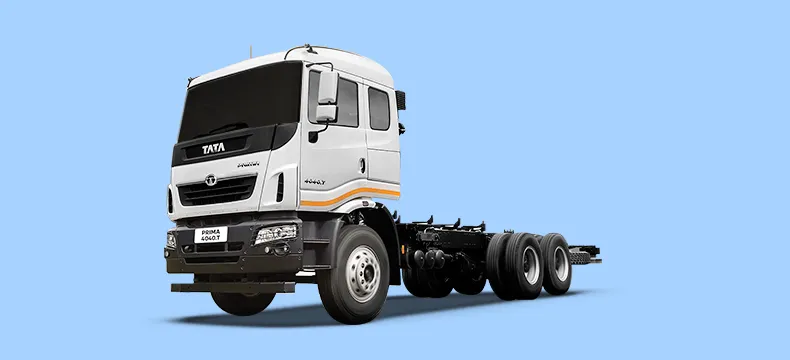
Tata Prima 4040.T
For the Middle Eastern construction sector, Tata Motors offers high-performance solutions like the Tata Prima 4040.T.
It is powered by a Euro 5-compliant Cummins ISLe 8.9 L engine, delivering an impressive 400 HP and 1700 Nm of torque.
Tata Prima 4040.T powerful engine is paired with an Eaton 9-speed gearbox, ABS brakes, and bogie suspension for enhanced adaptability, control, and stability
With a payload capacity of 25,000 kg, the truck demonstrates expectational capability, enabling systematic operations.
-
Tata Prima 4030.T
For the dynamic demands of the Middle Eastern construction sector, Tata Motors presents the Tata Prima 4030.T, an agile and efficient performer.
Powered by a Euro 6-compliant Cummins ISBe 6.7 L engine, the truck generates a 300 HP and 1100 Nm of torque, ensuring peak and consistent output across challenging conditions.
Furthermore, the Tata Prima 4030.T is equipped with a ZF 9S-speed gearbox and bogie suspension, offering enhanced drivability and vehicular stability.
With a payload capacity of 22,000 kg, it allows you to improve your operational capacity per in streamlined manner.
Conclusion
From job sites to rural outreach, water tankers are important for water distribution across diverse environments. The reliability, safety and multifunctionality it offers ensure uninterrupted water supply where and when it's needed most.
In the Middle East, where climate, terrain and infrastructure vary widely, having the right water tanker can make all the difference. Hence, choose Tata Motors for water tanker solutions that deliver exceptionally well.
Explore the full range of water tankers at the Tata Motors Middle East website and discover how smart engineering meets rugged performance.
Book a test drive or visit your nearest Tata Motors dealership today to experience unmatched efficiency and reliability.
FAQs
How do water tankers ensure water quality during transport?
Water tanks are made of stainless steel, which is non-reactive in nature, hence ensuring the water remains unalerted and of desired quality.
How often should a water tanker be cleaned?
Regular cleaning is essential, ideally after each use of potable water.
How do climate and geography affect water tanker usage?
Desert regions, water-scarce areas, and zones with high construction activity tend to have higher water tanker usage.
What industries rely most on water tankers?
Construction, agriculture, emergency services and event management mostly rely on water tankers.
- Tags
-

-
About the Author
Tata Motors
Tata Motors Group (Tata Motors) is a $45 billion organization. It is a leading global automobile manufacturing company. Its diverse portfolio includes an extensive range of cars, sports utility vehicles, trucks, buses and defense vehicles.
Latest Blogs